Food Challenge: Vietnamese Spring Rolls
Published: Oct 2, 2026
In this post, I will share my experience of learning how to make “Vietnamese Spring Rolls”. Spring Rolls can refer to several kinds of rolls in Chinese and Southeast Asian cuisines, many of which are fried. These spring rolls in particular are known as Gỏi cuốn in the south of Vietnam, and they are served fresh, not cooked on the outside.
Apparently many people in Vietnam don’t bother making these at home because it is a bit of an ordeal to put them together and there are so many vendors around them that do it well. But I don’t have the luxury of living conveniently close to ubiquitous quality Vietnamese food, so I thought it would be a fun project to learn how to make them myself at home.
The version of Vietnamese spring rolls that I learned how to make are a dish of shrimp, vegetables, herbs, and rice noodles wrapped in rice paper. They traditionally contain pork slices as well, but there are many variants both within Vietnam and spread over the rest of the world. Since I was making them at home, I just kept it a little more manageable and convenient for myself by omitting the pork.
There are a few options traditionally for the dipping sauce as well. Most of the blogs and recipes I found on the internet suggested a peanut sauce. Another popular choice is a dipping sauce made from fish sauce, chili, sugar, and lime juice.
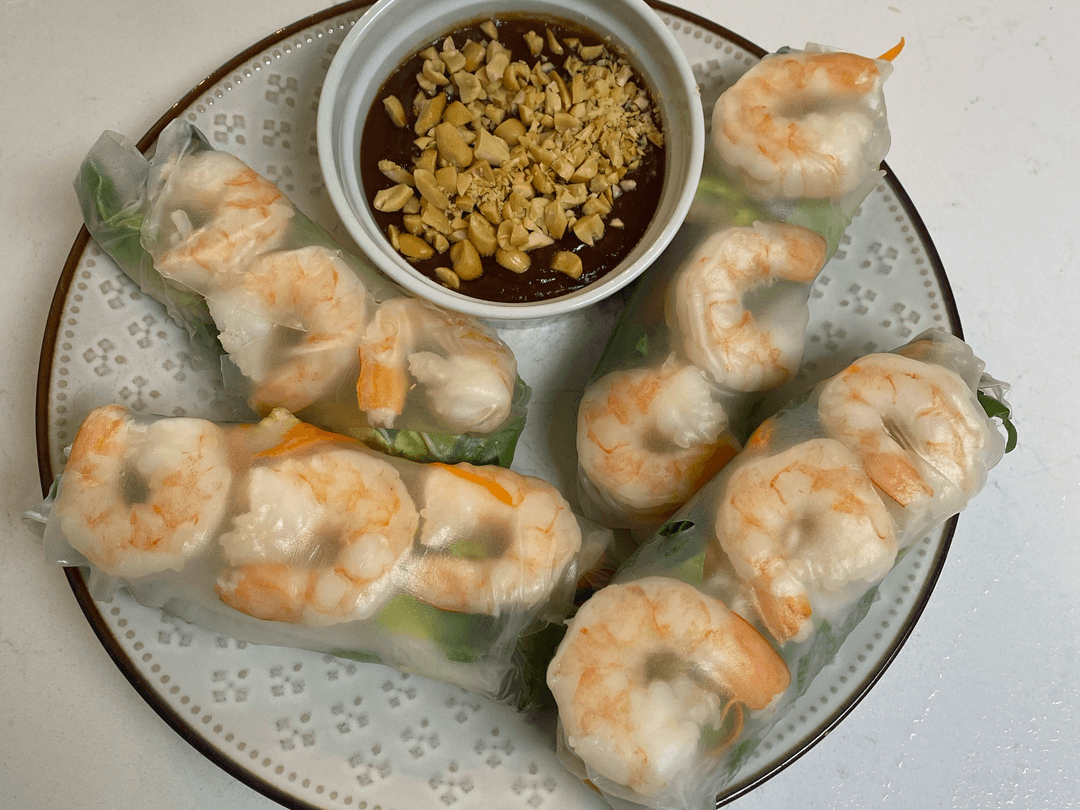
The Vietnamese name for these is said to translate to “salad rolls”. They are typically packed with vegetables and with herbs like mint, which make them exceptionally bright and fresh. They are especially great on a hot day, which I imagine is nice in the tropical areas of Vietnam. The liberal use of herbs like mint, cilantro, and Thai basil is one of my favorite things about Vietnamese food. Vietnamese cuisine seems to take great care in balancing savory, salty, sweet, bitter, and sour flavor profiles well. These rolls and the dipping sauces are packed with interesting flavors and textures that mesh well together. They are also pleasing to the eye, thoughtfully wrapped up to display the orderly row of shrimp at the top through the translucent wrapping.
To learn how to make these at home, I searched on the internet for a couple of recipes to learn from. Because I have had these at Vietnamese restaurants in the past and really enjoyed them, I had some knowledge of what I was looking for in a recipe. I looked over several recipes and most of them seem to follow a formula of rice paper, a protein or two like shrimp and pork, rice noodles, lettuce and maybe other vegetables, and mint and maybe other herbs. Several of the recipes suggested a peanut sauce to dip them in, which is what I ended up going with.
Since it has been hot around me lately, I wanted to emphasize the freshness of the recipe for the “salad rolls”. So I looked for a recipe that used a lot of vegetables and herbs. I ended up following this recipe for the spring rolls: https://healthynibblesandbits.com/fresh-vietnamese-spring-rolls-with-video/.
I liked the ingredients of this hoisin peanut sauce from this recipe though: https://www.hungryhuy.com/how-to-make-goi-cuon-vietnamese-spring-rolls/, so I ended up making it.
Here’s how I ended up putting together my Vietnamese spring rolls based on the advice of these two blog posts:
Ingredients for the Spring Rolls
- Circular Rice paper sheets (dried spring roll wrappers)
- Cooked rice vermicelli noodles
- Cooked medium sized shrimp
- A soft, leafy lettuce like butter lettuce, green leaf, or red leaf
- Fresh mint leaves
- Optional Vegetables: carrot, cucumber, red bell pepper
- Optional herbs: chives, Thai basil

Ingredients for the Peanut Sauce
- 2 tablespoons minced garlic
- 2 tablespoons neutral oil
- 8 tablespoons hoisin sauce
- 2 to 3 tablespoons peanut butter
- 1/2 cup water
- Ground peanuts
- Sambal chili sauce, to taste
Peanut Sauce Directions
- Sauté the minced garlic in the oil until fragrant
- Add the hoisin sauce, peanut butter, and water and mix.
- Bring to a boil then take it off the heat. Add the Sambal chili sauce to taste, depending on your desired spiciness.
- Chop up some peanuts, transfer sauce to a dipping bowl, and sprinkle peanuts on top of the sauce to serve.
Techniques and Directions for the Spring Rolls
- Boil the shrimp and then let them cool. Both recipes I shared above recommend cutting the shrimp in half, horizontally (so that the shrimp has a flat side that keeps it from shifting around as you bite into the spring rolls). Make sure that the curved colored side is facing down when you add them to the wrappers.
- Cook the rice noodles, drain them, and let them cool.
- Slice any vegetables you may be using like carrots, peppers, or cucumber thinly like matchsticks so they are easier to chew
- Snap off any hard stems of lettuce because they can poke through the rice wrapper
- Wet the surface of where you wrap the spring rolls or use a dampened paper towel as your surface to prevent the rice paper from sticking.
- To soften dry rice paper, quickly dip the rice paper in a bowl of lukewarm water, no longer than a few seconds.
- Order for wrapping: wetted wrapper, a soft, leafy piece of lettuce on the lower half of the paper, cooked rice noodles, optional vegetables (I used julienned carrots, julienned bell pepper, and julienned cucumber), leaves of mint, optional herbs (I used basil and chives)
- Next, line the shrimp (that have been cut in half) about an inch below the top edge of the rice paper, pink sides down. By placing them close to the top of the edge of the paper, the shrimp will look more vibrant in the final roll because they will be covered by only one layer of rice paper.
- Roll until you reach the shrimp, then fold the left and right sides in, and roll tightly to complete it
These turned out great. I was proud of myself for wrapping them up relatively neatly. They were fresh and full of flavor. The peanut sauce was delicious with them. I like how they are designed to display the colorful shrimp all lined up at the top. I missed the detail that you are supposed to cut the shrimp in half to prevent them from sliding around and to prevent overfilling, but that adds another detail to the thoughtful design of this food. The chewy textures of the wetted rice paper that kind of vacuum seals everything up and the little bundle of rice noodles goes really well with the shrimp, vegetables, and peanut sauce.
I may have packed mine too full of ingredients though. Mine were a mouthful, nearly bursting at the seams and kind of falling apart when I bit into them. I should have cut back on some of the vegetables a little bit. I also didn’t read in the directions for both of the recipes I shared above that you should cut the shrimp in half so they lay nicely and neatly.
Preparing them was also a little more of an ordeal than I was expecting. I can see why, according to the Hungry Huy recipe I shared above, that the Vietnamese don’t tend to make these themselves at home. This recipe contains ingredients that are unusual for me to have like rice paper, rice vermicelli, fresh mint leaves, and soft leafy lettuces. Cooking shrimp, cooking rice vermicelli noodles, cutting and julienning several vegetables, chopping garlic and peanuts, making a sauce on the stove, and carefully wrapping stuffed ingredients in a wetted rice paper is a lot of work for a fresh little appetizer.
Nonetheless I am very glad I made them. They were delicious and a breath of minty fresh air from stuff I normally cook at home for myself.