Guitar Challenge: Malagueña
Published: Oct 20, 2025
In this musical challenge, I took on learning an easy version of “Malagueña” for the classical guitar.
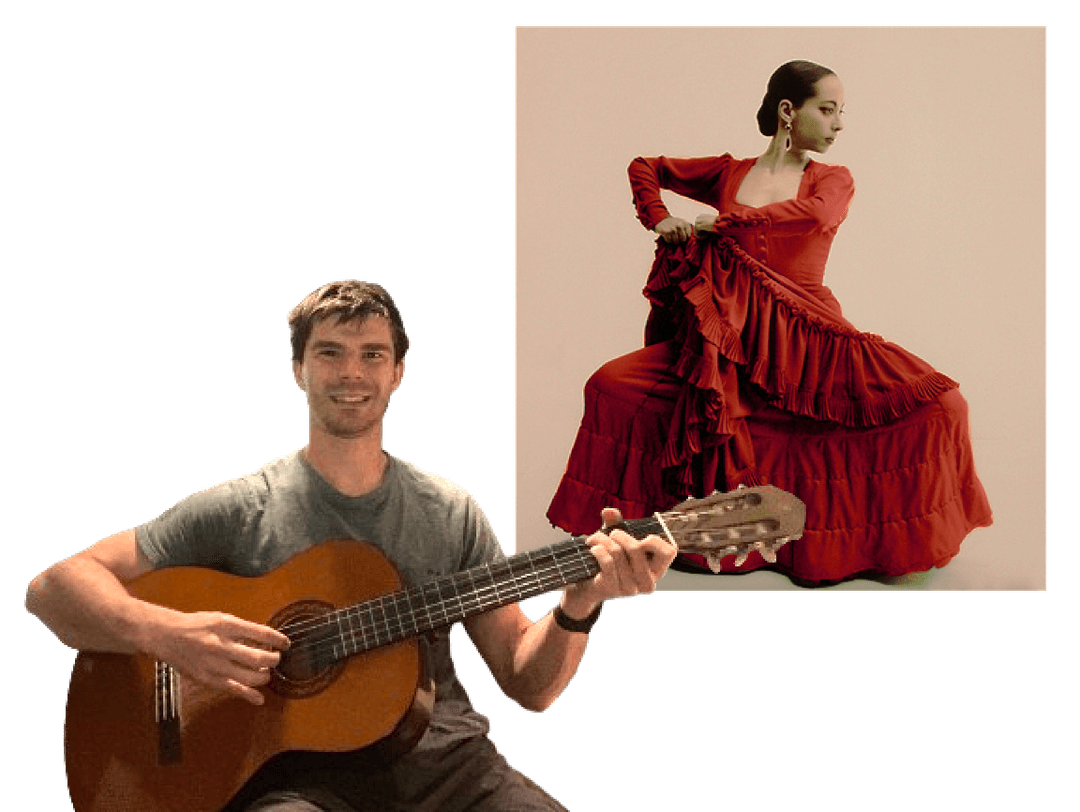
Malagueña is a Spanish folk tune that is known throughout the world. It sounds quintessentially Spanish. It evokes images of matadors and flamenco dancers. Its origins are a little unclear, but it is thought to have originated in Málaga, Spain and has been transformed through the years into countless variations performed by many different musicians around the world.
The guitar, as we know it today, owes much of its soul and identity to Spain. The modern instrument took shape there in the 19th century. Spanish composers and performers created classical pieces and folk styles like flamenco that remain highly influential to guitar playing today.
The "Spanish guitar" style has a romantic and dramatic sound that makes use of intricate fingerstyle techniques. "Malagueña" is a great example of Spanish style guitar playing.
I learned a version of the song for classical guitar from the following video tutorial:
I chose to learn this particular version of the song because of its beginner friendliness. As the tutorial's title suggests, this is an easy version of the song for guitar. I chose to learn it because it seemed like a great introduction to learning how to play Spanish and Latin guitar music. There are much more intimidating versions that require pristine classical technique and skill that are beyond my abilities. This "easy" version was enough of a challenge for me.
This song required some memorization. Not only did I have to memorize all of the distinct parts note by note, but I also had to memorize the sequence of the different parts in order. I had to write out the sequence of the separate parts with my own descriptors (high main riff, low main riff, high slow melodic part, low chords part, high chords, ending with weird chord, etc.) and memorize them.
This took me a little while to get down, and I would completely forget certain sections at times. I had to look for patterns and chunk together some of the sections to make it easier to remember. Eventually I was able to play through the song without consciously recalling my written out sequence of sections.
The main riff is the most recognizable and distinct part of the song. The main riff, as I learned in this particular version, involves alternating notes of the droning high E string with the lower melody notes of the riff. This riff is a lot of fun to play and is a nice test of rhythm and coordination. The riff is first played on the higher D, G, and B strings on the guitar and then dropped down an octave to the lower E and A strings on the guitar.
The main riff is the part that gave me the most trouble. It only requires you to play one note at a time alternating between the riff and the droning high E string, but it is played quite fast, making it hard for me to play consistently without making mistakes.
Here is me playing through the song:
My version does not sound nearly as good as the video tutorial version. I am generally playing the right notes like the tutorial's tab, but the dynamics, rhythm, and tone of my playing is obviously nowhere near as refined. My guitar could probably use a change of strings and I probably need to use a better microphone too.
Once again I had a hard time filming without completely messing up the song. I had to film dozens of times, having to wipe off my sweaty hands with a towel in between tries. I was desperately hoping that I didn't mess up or that something like a lawn mower or an ambulance wouldn't drive by as I started filming.
It is stressful to have to execute something on the edge of your abilities with lots of different parts. I am so impressed with professional musicians' ability to be able to play through even the easiest of songs without messing up. I need to practice much more to start feeling more of an effortless flow with the guitar.
Overall, this was a fun song to learn. I am glad I learned how to play a Spanish-style piece on the guitar, as I have always loved Spanish and Latin style guitar music. I hope to learn more songs like this on the guitar in the future.